
Knowledge Marketplace
Knowledge Marketplace that converts assets into Knowledge Products with purpose, ownership, lifecycle, and embedded policies. On a unified Metadata Lake and hybrid lineage, active metadata management automates security/quality/auditing in systems, enabling regulated end-to-end self-service.
Guiding principles
Components
Edit Content
Information Portal
Discovery layer for any profile: semantic searches, configurable filters for any attribute, adjustable ranking by weight and query reuse. Connect results with context (glossary, lineage, quality, contracts) to accelerate time-to-knowledge.
Edit Content
Information Marketplace
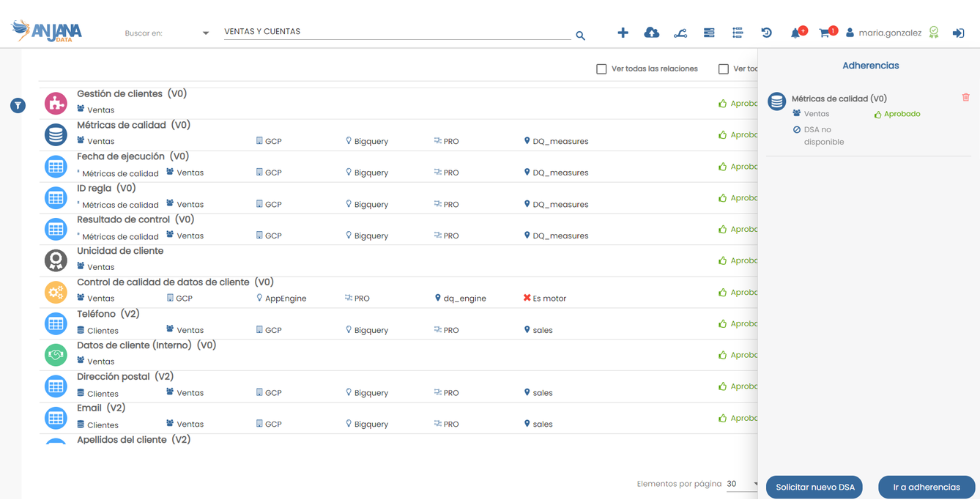
Publication, discovery and regulated consumption from Information Products (Data & AI). Differentiated experiences for:
· Product Management (creation, editing, versioning, lifecycle),
· Publication (policies embodied in DSAs and Contracts),
Consumption (request via shopping cart and automatic replenishment).
All of this is operationalised end-to-end with native integrations.
Edit Content
DSAs and Data Agreements
The Data Sharing Agreements logically group datasets/products for controlled transfer of rights and obligations; the Data Contracts fix specific terms of use per consumer/platform and manage permissions by adherence to the DSA. Traceability of workflows for auditing.
Edit Content
Active Metadata Orchestration
Connectors out-of-the-box and APIs for:
- Discover metadata and trace.
- Inject tags and govern from the outset.
- Manage permissions just-in-time.
- Obtain samples obscured.
- Audit accesses/executions.
- Manage structures (creation/modification/deletion).
Object “Product of Knowledge”
One Knowledge Product is a publishable asset with purpose, owner/roles, outbuildings (datasets, processes), SLA/SLO and KPIs, quality controls, evidence (e.g. models) and life cycle stages (draft, published, deprecated, retired).
Metamodel and semantics
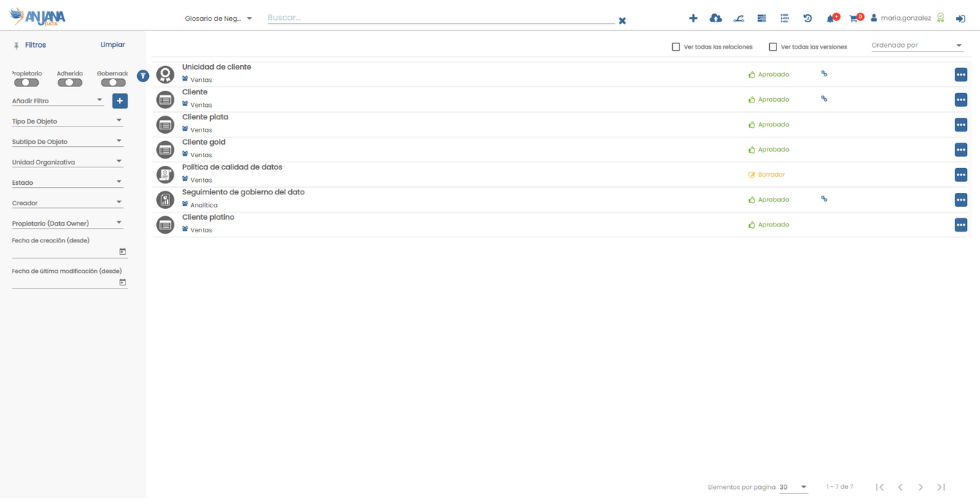
Metamodel flexible and extensible with types of entities and relationships of independent morphology; attributes organised by templates with rules for allocation/validation. The Business Glossary is integrated as an upper layer for cross-cutting common language. The lineage is materialises as a Knowledge Graph to navigate dependencies and simulate impacts.
Roles, domains, and operating model
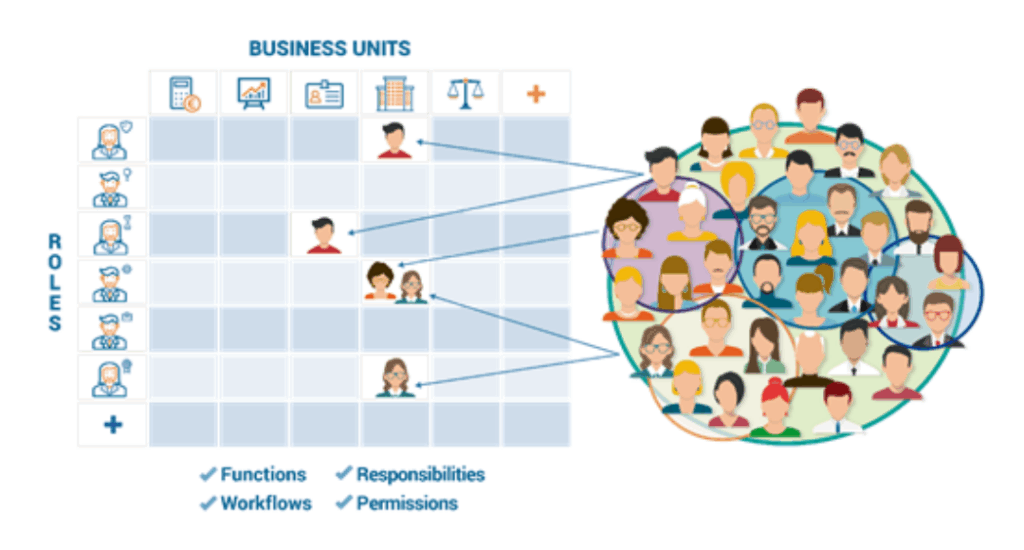
Model multi-level/multi-domain with permissions for domain/role cell; the nominal users inherit functions via role association, which decouples individuals from responsibilities and facilitates rotation/scaling without reconfiguring policies. The BPM flows implement policies, notify stewards/owners and record evidence.
E2E Product Flow
Automations typical
Granting/revocation just-in-time orchestrated against IAM/LDAP and technologies (storage, consumption, virtualisation) when approving requests/adherences.
Definition of rules/controls and execution in external motors (native integration with DQ market); results intake such as metadata, KPIs, and alerts.
Provisioning y schema ops (create/modify/delete storage points) to speed up time-to-ready.
Capture platform logs to reconstruct traces and control access/executions.
On-the-fly queries with obfuscation of sensitive fields according to template and policy.
Security, compliance, and auditing
Platform enterprise-ready aligned with the National Security Scheme (ENS); complete history actions and changes (UI, API or programmatic), with version recovery. You can add external audit (accesses, transformations, executions) in the Metadata Lake for a 360º view of compliance.
KPIs and measurement
Adoption
Number of effective searches, request→approval ratio, fulfilment lead time by domain/platform.
Quality/Trust
% products with active metrics, SLA/SLO compliance, non-compliance incidents, and resolved alerts.
Efficiency
Automations implemented (permissions, structures, DQ), T2R (time-to-ready) savings, and asset reuse.
Use cases
Interoperability and architecture
Architecture modular/microservices, API-first, without vendor lock-in, multi-environment (on-premises, cloud, hybrid) and multi-cloud: deployment on VMs, Kubernetes or SaaS. Extended native integration with cloud catalogues, data lakes/lakehouses, computer engines and virtualisation layers for active government.
Government of change and resilience
Impact control in the face of change from the lineage (what affects/what affects me), automatic impact detection and preventive/mitigating mechanisms. Configurable versioning by object type, expiry management and version comparison for secure changes.
Adoption and licensing model
Pay-per-use no user limit, with all native modules and integrations included; available in IaaS/PaaS or SaaS with managed services, Customer Success and access to the Customer Portal. Approach incremental/iterative by use cases to maximise time-to-value and monitor ROI.