

Implementation and adoption
We maximise the time-to-market and the time-to-value with an end-to-end deployment methodology and licensing model flexible, transparent and scalable based on pay-per-use. This section describes how we implement the Anjana Data Platform in your organisation and how we structure user licences.
Implementation approach
Implementation is not limited to installing technology. We operationalise the governance model and deliver a first use case in production with measurable metrics.
Initial assessment of architecture and infrastructure
Inventory of data platforms, networks, security, identities, and dependencies.
Initial assessment of architecture and infrastructure
1
Provisioning of environments and infrastructure
Preparation of environments (development, pre-production, production) and associated resources.
Provisioning of environments and infrastructure
2
Deployment of Anjana Data services
Installation of core components and health verification.
Deployment of Anjana Data services
3
Definition of the use case and success metrics
Selection of business case, KPIs, and target data sources.
Definition of the use case and success metrics
4
Technical configuration of connections and permissions
Integrations with IAM, technical catalogues, data platforms, and key systems.
Technical configuration of connections and permissions
5
6
Functional configuration of the platform
Functional configuration of the platform
Metamodel, domains, roles, approval flows, notifications, and templates.
7
Training and workshops
Training and workshops
Training by profile (administration, platform, user) and knowledge transfer.
8
Execution of the use case and drawing conclusions
Execution of the use case and drawing conclusions
Production launch, monitoring, lessons learned, and scaling plan.
9
Licence activation
Licence activation
Initial sizing, registration on the Customer Portal, and remote support.
Initial assessment of architecture and infrastructure
Inventory of data platforms, networks, security, identities, and dependencies.
1
Provisioning of environments and infrastructure
Preparation of environments (development, pre-production, production) and associated resources.
2
Deployment of Anjana Data services
Installation of core components and health verification.
3
Definition of the use case and success metrics
Selection of business case, KPIs, and target data sources.
4
Technical configuration of connections and permissions
Integrations with IAM, technical catalogues, data platforms, and key systems.
5
Functional configuration of the platform
Metamodel, domains, roles, approval flows, notifications, and templates.
6
Training and workshops
Training by profile (administration, platform, user) and knowledge transfer.
7
Execution of the use case and drawing conclusions
Production launch, monitoring, lessons learned, and scaling plan.
8
Licence activation
Initial sizing, registration on the Customer Portal, and remote support.
9
Key blocks of work
Expected outcome
Operational platform, governance model configured, first use case underway, and value KPIs established.
Deployment and service modalities
We adapt to the policies of each organisation.
Anjana Data's architecture is agnostic and interoperable; modules are deployed where they add the most value and comply with corporate policies.
On-premises
For environments with strict sovereignty, isolation, or ENS requirements.
IaaS/PaaS (Customer Cloud)
Deployment managed in the customer's cloud with native integration into IAM and platform services.
SaaS
Managed service consumption with minimal operational overheads.
Licensing model (pay-per-use)
What exactly is being licensed?
Value-added services included
Edit Content
Customer Portal
Full access to:
Guides and documentation for User, Installation, Operation, Administration, and Configuration.
Documentation of technical architecture and platform technologies.
APIs and SDKs (reference and examples).
Specific information for partners
Notes from versions and updates.
Documentation of licences, prices, support, and professional services.
Restricted content: use cases, webinars, and white papers
Specific information for partners
Edit Content
Training Platform
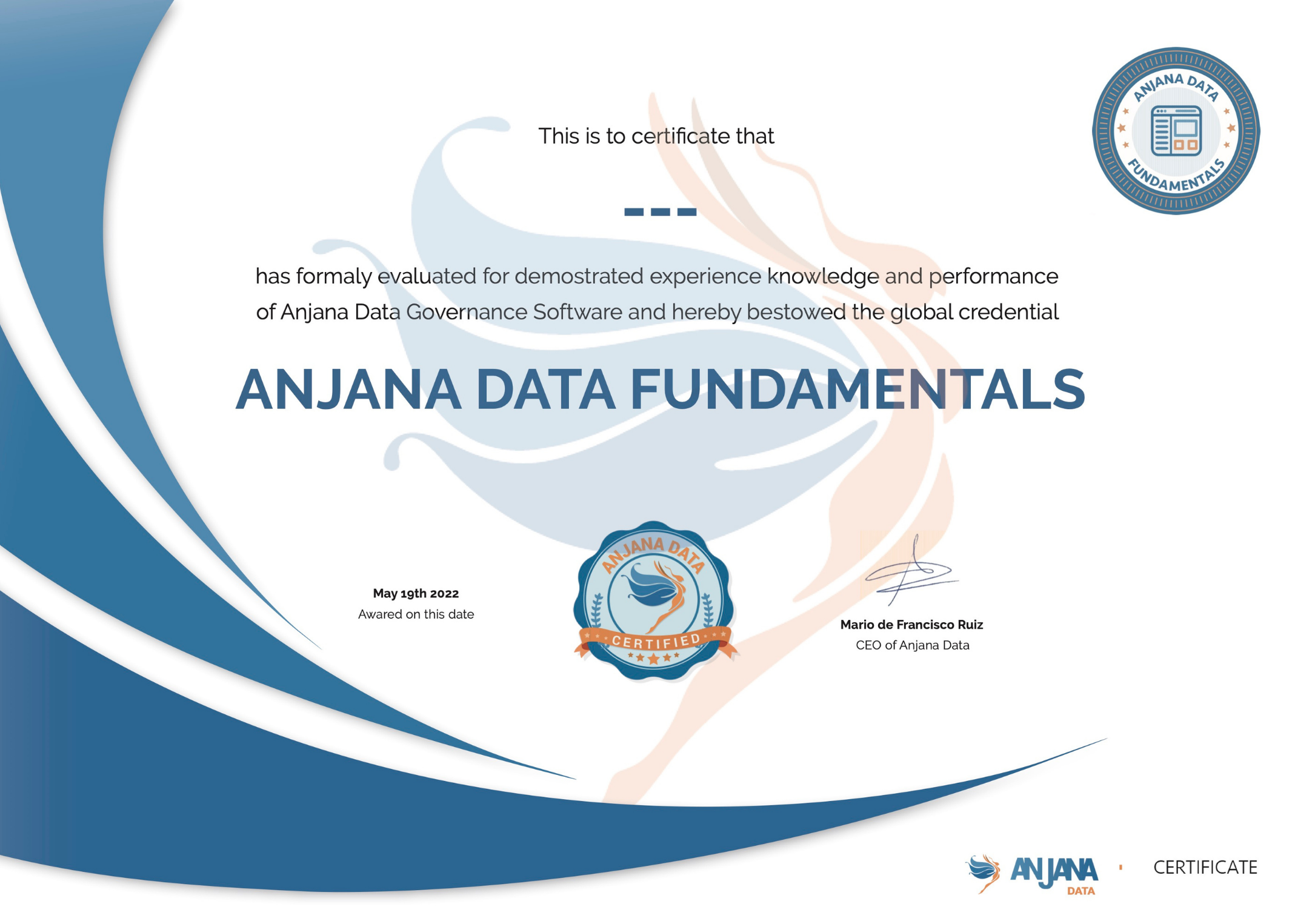
Anjana Data Certification with itineraries by role:
-
Administrator
-
Platform
-
User
Edit Content
Standard remote support (8x5)
-
24/7 ticket creation in the support tool.
-
Unlimited open tickets.
-
TOR (Response time) max. 1.2 hours for categorisation of new tickets.
-
TOA (Response time) max. 24 hours for the first update with resolution notification.
-
Ticket types: Hotfix, Configuration, Error (Bug), General support, Roadmap request.

Frequently Asked Questions
Frequently asked questions
Any dataset registered in the metamodel and subject to the governance lifecycle whose status is Approved o Deprecated.
No. Licensing does not penalise the growth of the data community.
By sections of governed objects. You can expand the section as your use cases evolve.
Yes. Licences include updates and access to release notes and roadmap.
Yes. The design is modular and allows for hybrid architectures.